


-
Electric Bidets
About Electric Bidets
All our electric bidets are 220-240V 50-60hz!
Main advantages of this type of toilet seats are convenience, luxury and ease of use. Electric bidet seats come standard with a heated seat. They also include warm water front and rear wash. The water temperature and pressure are adjustable and everything is controlled either by an attached control panel or a wall mounted remote control. The water will be warm right away, and you can even adjust the position of the nozzles. Electric bidet toilet seats are especially useful for the elderly, the disabled, or people with limited mobility who may have trouble operating non-electric bidets. But of course, they are suitable for everyone who wants to improve their toilet hygiene and reduce the use of toilet paper.
To install an electric toilet seat, an electrical outlet (GFCI) and a cold water line from the shut off valve next to the toilet is needed.
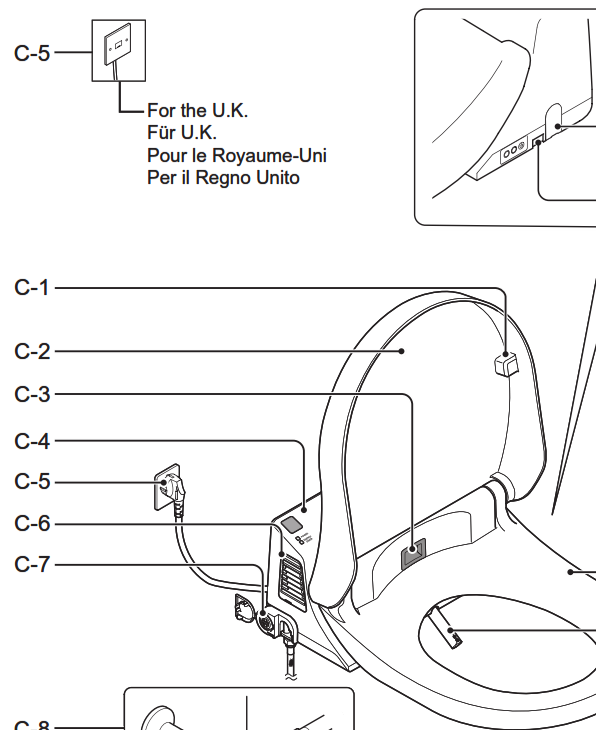 Recommended power outlet position. Most bidet seat models have the power cord outlet on the left side (when facing the toilet).
Water supply connection options:
1. Close-coupled toilets: Using the supplied T-Connector, simply connect the water hose to the valve inside the cistern. In some cases the valve is external making it even easier to connect to the T-Connector (as seen on the picture 1b):
1a)
1b)

2. Wash basin valve: Insert the supplied T-Connector between the corner valve and the hose underneath the sink.
.

3. Concealed cistern: Remove the Push plate / Flush plate and insert a water hose, connecting it a Y-Connector to the valve. Below a corner valve has to be put in place (Ask us how to measure where the hole below has to be made, if you have already covered your wall in tiles. It is easier as you may think)

 ©Copyright Tooaleta


Tooaleta wash & dry toilet seat
020 3519 0995CONTACT US
0item(s)
You have no items in your shopping cart.


